

Big W, or designated wilderness as prescribed under the 1964 Wilderness Act, is one of the most biocentric pieces of legislation ever passed by Congress. Under the Act’s mandate, federal lands that meet the essential criteria of roadless character and “untrammeled” by human influence will be protected from resource exploitation so that natural evolutionary and ecological processes are preserved.

One of the values of wilderness designation is that it sets limits and promotes restraint, traits that humanity needs most. Wilderness designation prohibits most forms of human resource exploitation, including logging, mining, oil and gas development, and motorized access.

Wilderness designation is also one of the most democratic institutions in our society. While some human technologies are prohibited, wilderness areas are open to all members of society with no limits based on race, ethnicity, religion, or political alignment.

Wilderness designation has practical value to society because it protects the purity of watersheds, provides habitat for wildlife, and contributes to ecological processes that contribute to biodiversity.

Given that most authorities recognize that we are amid the 6th Great Extinction, preserving as much territory for the continuation of natural processes is critical to maintaining a livable planet for all life, including humans.

In recent years, anthropocentric, politically liberal academics have criticized the idea of parks and wilderness, feeling that preserving nature harms social justice efforts. Social justice is a worthy enterprise, but there is ultimately no social justice on a dead planet.

Wilderness designation promotes human sanity. Even if you don’t go there, knowing it exists has value to society. As author Wallace Stegner noted, such places are part of a geography of hope. Wilderness designation represents the best attributes of humanity.

Wilderness and park preservation is an act of generosity and humility. It recognizes that humans must and can share the planet with the rest of creation.

From a more significant philosophical perspective, these critics ignore justice for nature and life other than from a human-centric perspective.

Contrary to the academic left’s assertion, Nature doesn’t need humans to be “healthy” or “sustainable.” Instead, humans need intact Natural systems.

One common reframing from critics is that there is no such thing as “wilderness” or “wildlands” since, in their view, every corner of the Earth has been impacted by human endeavors and societies.

No place, they assert, is “pristine.” Pristine is a strawman. Every serious wilderness advocate knows that humans have influenced nearly every corner of the planet, and nothing is pristine in the sense that it is untouched by humans.

However, there are degrees of human impact. The Brooks Range of Alaska is under less human manipulation and control than the Los Angeles Basin.

Wilderness advocates define wildlands as “self-willed.” That is, natural processes dominate and control the landscape and life thereon. The goal of wilderness designation is to set aside tracts of land (and sea) to minimize the human footprint.

Some academics criticize the designation of wilderness as a “white man’s” idea and a form of colonialism. Yet every culture around the globe has places that are considered, for want of a better term, “sacred” lands where normal human exploitation, travel, and behavior are deemed unacceptable.

Setting aside special areas primarily dominated by natural processes is a common denominator of all human societies. Whether they are called “wilderness” or have some other name, the preservation of nature is recognized in all societies as a social good.

Wilderness preservation is our secular American society’s way of recognizing natural values as worthy of special treatment and reverence. Just because American philosophers initially promoted the concept of wilderness does not make it less valuable than Democracy, which originated in Greek society 2000 years ago.

Given the burgeoning global human population and the growing technological ability to manipulate the planet, wilderness preservation has even more value today than when philosophers like Henry David Thoreau, Ralph Waldo Emerson, and John Muir first advocated for national parks and other nature preserves.

Wilderness designation has practical value to society because it protects the purity of watersheds, provides habitat for wildlife, and reminds people that they are outside human influence.

Research has demonstrated that wildland preservation is the best means of preserving biodiversity because it protects evolutionary and ecological influences that create and support biodiversity.

Ultimately, we do not designate wilderness for recreation, clean water, carbon storage, or any other human need, though it certainly does provide for these things; ultimately, it is about giving a voice and place to the voiceless on the planet.

Only 5% of the US land area is formally designated Wilderness under the Wilderness Act, but millions of acres possess the essential criteria for preservation. As a society, we can honor the planet’s evolutionary history by preserving more federal lands as designated wilderness.

Thus, wilderness preservation is a gift to the future. It is ultimately about preserving the best of humanity’s traits—respect, integrity, humility, honor, sharing, generosity, and kindness. These values are essential in all societies and worth safeguarding. Wilderness preservation is one way we demonstrate a commitment to these values.
Originally published in The Wildlife News.
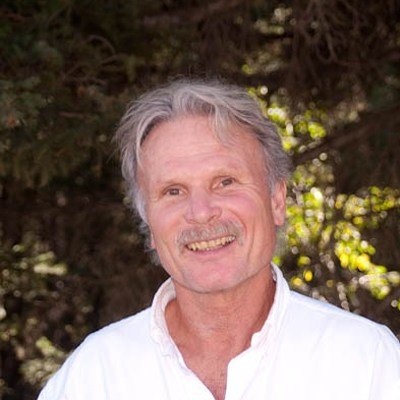
George Wuerthner, resident of the US West, is an ecologist, photographer, and wilderness explorer. He has published 38 books on various topics related to environmental and natural history. He has visited over 400 designated wilderness areas and over 200 national park units.
George’s Books: On Amazon
George’s interview on Public Lands Grazing on Rewilding Earth podcast.
I am always on the watch for something in print that proves, somehow, much the way science has demonstrated the cause-and-effect of global warming either in sophisticated or simple terms, that without wilderness left on our earth civilization can only, no way around it, collapse. That this can become public knowledge or fact, like global warming, and that those who accept it are free to fight the misinformation or watch the collapse in day to day action.
People make decisions based on the way they feel, not based on facts. Read George Lakoff’s work on this subject for details. Moreover, the intellect is only one way to look at the universe, and restricting one’s view to it produces the kind of destruction that humans have been committing for thousands of years. What we need to develop is our wisdom and empathy, and to expand our consciousness, not to continue obsessing on our intellect. See this book outline for details: https://rewilding.org/fixing-humans-by-expanding-our-consciousness/
Great article, George. As a leader with Great Old Broads for Wilderness, I would love to advocate for more wilderness protection. How do we go about prioritizing and setting aside the land that needs protecting?
If humans were living properly on the Earth, the whole planet would be wilderness. Instead, humans have separated themselves from the natural world, and have become the medical definition of a cancerous tumor on the Earth. THAT’s the real problem. In the context of this ecologically and environmentally destructive society, of course we should fight for as much wilderness preservation as possible. But we need a lot more than that; we need total wilderness RESTORATION. Nothing less will suffice. While this is a very long-term goal, probably requiring thousands of years, it is nevertheless what’s necessary, both ecologically and morally.
Yes, some are claiming that “there is no such thing as “wilderness” or “wildlands” on the basis of the fact that now virtually every corner of the Earth has been impacted by human endeavors and societies–shall we make our impact all the more ubiquitous by expunging the very last remnants of “self-willed” land?
Even more disconcerting is the recent upsurge of interest in the work of Steven Vogel, famously known for his attack on the concept of nature, or even the denial of the existence of “nature itself,” a position that has been termed “logocentric postnaturalism” at best, if not out-and-out antirealism. This is the last sort of thinking that should be embraced by those who claim a position that embodies “Environmental Ethics”!